
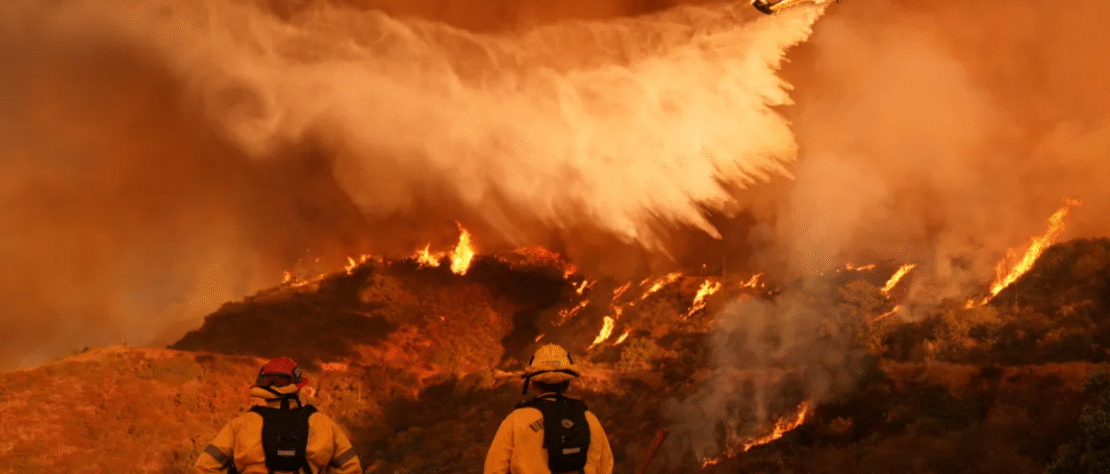
A Year the Planet Fought Back — and Humanity Paid the Price
Shocking Extreme Weather Disasters, Global Devastation, and Urgent Calls for Climate Justice
As 2025 draws to a close, this year will be etched into history as a brutal wake-up call to the accelerating climate crisis. Entire communities were swallowed by raging floods. Skies across continents were choked with wildfire smoke. Cyclones unleashed destruction at a scale once thought unimaginable.
These were not dystopian projections.
They were the lived reality of extreme weather events in 2025.
Thousands lost their lives. Global economic losses crossed $220 billion. And once again, those least responsible for climate change bore the heaviest burden.
“Once-in-a-lifetime disasters are no longer rare. They are becoming routine.”
From South Asia’s submerged cities to North America’s scorched landscapes, the climate disasters of 2025 exposed a harsh truth: climate change is not just an environmental crisis — it is a crisis of inequality, justice, and survival.
Drawing on reporting from The Guardian, AccuWeather, the IPCC, and global policy forums, this in-depth report documents a year the world cannot afford to repeat.
A Year of Unrelenting Fury
Imagine a world where “once-in-a-lifetime” storms arrive every year.
In 2025, extreme weather intensified by human-driven climate change — including fossil fuel emissions that supercharged ocean heat — unleashed devastation across every continent.
- The United States recorded 14 billion-dollar disasters in just the first half of the year, totalling $101.4 billion
- Christian Aid estimates the top 10 global climate disasters exceeded $120 billion
- More than 4,000 lives were lost in South Asia alone
“The climate crisis is a challenge that can only be solved together.”
— Green Climate Fund statement on X
Funding for climate action grew sharply — from $145.8 million in 2015 to $19.3 billion in 2025 — yet inequality remained stark.
Low-income countries, responsible for less than 10% of global emissions, suffered the deadliest consequences.
At COP30 in Brazil, leaders pledged $1.3 trillion annually by 2035. Critics, however, warned of “progress with pitfalls.”
With IPCC projections warning of 30% more extreme rainfall by 2030, the question is unavoidable:
Pull-Quote:
Will 2025 become a turning point — or a rehearsal for worse to come?
1. THE DEADLIEST AND COSTLIEST DISASTERS OF 2025
A Planet Under Siege
2025 didn’t just break climate records — it obliterated them.
Scientists from World Weather Attribution linked many of these disasters directly to rising global temperatures, which made storms stronger, wetter, and slower-moving.
Cyclones & Hurricanes
Monsters Fueled by Warmer Oceans
Tropical cyclones in 2025 were unprecedented in scale and intensity.
- Cyclonic Storm Senyar, the first recorded storm in the Strait of Malacca in 135 years, devastated Sri Lanka, Indonesia, Thailand, the Philippines, and Vietnam
- Over 1,600 people were killed, with millions displaced across Southeast Asia
“It was like the sea rose up in anger.”
— Survivor, Hat Yai, Thailand
In the Caribbean, Hurricane Melissa, a Category-5 storm, battered Jamaica, Haiti, Cuba, and the Bahamas:
- $8–15 billion in damages
- Up to 25% of Jamaica’s GDP wiped out
- 626,000 people affected
Southern Africa endured repeated storms that erased years of development progress.
Floods
When Rivers Became Weapons
Monsoon flooding turned South Asia into a humanitarian disaster zone:
- Over 4,000 deaths in India and Pakistan
- 9.47 million hectares of crops destroyed
- Millions displaced as megacities like Delhi saw supply chains submerged
“Our homes, our farms — gone in days.”
— Farmer, Punjab
Across Europe, rivers shattered 100-year flood records, crippling industrial hubs.
In the United States, floods in Central Texas added to the year’s billion-dollar disaster count.
Wildfires
Infernos Without Seasons
Wildfires in 2025 burned without borders or seasons.
- North America saw prolonged heatwaves ignite massive fires, including in California
- Smoke spread across continents, triggering public-health emergencies
“The sky turned orange. We couldn’t breathe.”
— Los Angeles resident
Australia and South America experienced fires encroaching on urban centres, forcing mass evacuations.
Droughts & Heatwaves
The Silent Killers
- India recorded temperatures above 50°C, overwhelming hospitals
- Droughts cut crop yields by up to 30% across Africa, Brazil, and the western U.S.
- Violent tornado outbreaks ranked among the worst on record
2025 Disaster Snapshot
| Disaster Type | Regions Hit | Lives Lost (Est.) | Economic Toll |
|---|---|---|---|
| Cyclones/Hurricanes | SE Asia, Caribbean | 3,400+ | $25B+ |
| Floods | South Asia, Europe, U.S. | 5,000+ | Part of $120B |
| Wildfires | N. America, Europe, Australia | Hundreds | Billions |
| Droughts/Heatwaves | Global | Thousands | 30% crop losses |
2. CLIMATE JUSTICE 2025
A Crisis That Punishes the Innocent
The climate crisis in 2025 followed a familiar pattern:
those least responsible suffered the most.
Developing nations in Africa and Asia — home to 80% of the world’s poor — faced:
- Higher death tolls
- Mass displacement
- Slower, weaker recovery
“Climate change is the biggest challenge facing humanity.”
— Global health advocates
Protests erupted worldwide, demanding accountability from high-emitting nations.
Without decisive action, 68–135 million people could fall into poverty by 2030.
Human rights organisations warn that climate inaction is now a direct violation of basic rights.
3. COP30: PROMISES, PRESSURE, AND POLITICS
Hope or Hype?
At COP30 in Belém, Brazil:
- Nations pledged $1.3 trillion per year by 2035
- Adaptation funding was set to triple
- A Just Transition Plan placed social equity at the centre
The European Union pushed for 66–72.5% emissions cuts by 2035, while carbon markets advanced under Article 6.
Yet frustration lingered.
“The outcome left many disappointed.”
— International climate policy observers
Fossil fuel phase-out commitments remained weak, raising doubts about delivery.
4. THE ROAD AHEAD (2026–2030)
A Narrowing Window
IPCC-aligned forecasts warn:
- 30% more extreme rainfall
- Longer, deadlier heatwaves
- Rising coastal flood risks
- Growing concerns over ocean circulation slowdown
“We missed the boat to stay below 1.5°C — now we’re fighting to survive the consequences.”
5. WHY 2025 MUST CHANGE EVERYTHING
Since 1995, climate disasters have claimed over 830,000 lives worldwide.
2025 showed that climate change is no longer a future threat — it is a present-day emergency reshaping economies, politics, and human survival.
But hope remains in collective action.
“Security, climate, and education are the same fight.”
The clock is ticking.
The choice is clear.
Act now — or accept that 2025 was only the beginning.