
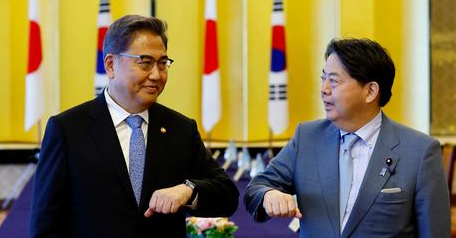
South Korea and Japan have taken another step toward strengthening their strategic partnership in critical mineral resources, holding the second round of bilateral talks aimed at enhancing cooperation in mineral supply chains. The discussions come at a time when global competition for essential raw materials is intensifying, driven by the rapid expansion of clean energy technologies, electric vehicles, and advanced manufacturing.
According to South Korea’s Yonhap News Agency, officials from the South Korean Ministry of Trade, Industry and Resources and Japan’s Ministry of Economy, Trade and Industry (METI) met on Wednesday to address shared challenges in the mineral sector and explore avenues for closer collaboration.
Focus on Copper and Market Volatility
One of the key issues discussed during the talks was the recent decline in copper treatment and refining charges, a trend that has raised concerns among producers and policymakers alike. Copper is a cornerstone material for renewable energy infrastructure, electric vehicles, and power transmission networks, making its stable supply critical for both countries’ industrial strategies.
Officials examined how fluctuations in refining charges could affect downstream industries and discussed policy coordination to mitigate risks arising from market volatility. The decline in charges has been linked to oversupply pressures and changing global demand patterns, underscoring the need for coordinated responses among major industrial economies.
Strengthening Multilateral Cooperation
Beyond bilateral concerns, South Korea and Japan reaffirmed their commitment to multilateral frameworks, including the Minerals Security Partnership (MSP). This initiative brings together like-minded countries to secure reliable, diversified, and sustainable supply chains for critical minerals such as lithium, cobalt, nickel, and rare earth elements.
By working within such frameworks, both nations aim to reduce over-dependence on single suppliers and enhance transparency, environmental standards, and resilience across global mineral supply networks.
Joint Development in Third Countries
A significant outcome of the discussions was the emphasis on joint development and production of critical minerals in third countries. South Korean and Japanese officials explored opportunities to collaborate on overseas mining projects, processing facilities, and infrastructure investments.
Such partnerships are seen as mutually beneficial, allowing both countries to combine technological expertise, financial resources, and diplomatic networks. Joint projects could also help host countries develop their mineral sectors more sustainably while ensuring long-term access to essential resources for Northeast Asia.
Strategic Context and Future Outlook
The renewed focus on mineral cooperation reflects broader geopolitical and economic shifts. As countries worldwide race to secure materials essential for the green and digital transitions, South Korea and Japan are seeking to align their strategies to remain competitive while safeguarding supply chain security.
Analysts note that closer coordination between the two nations could serve as a stabilizing force in global mineral markets, particularly as demand for critical resources continues to rise. The talks also signal a pragmatic approach to economic diplomacy, prioritizing shared interests despite historical and political sensitivities.
With both governments expressing a willingness to deepen collaboration, future rounds of dialogue are expected to expand beyond copper to include a wider range of strategic minerals, reinforcing regional and global supply chain resilience.