
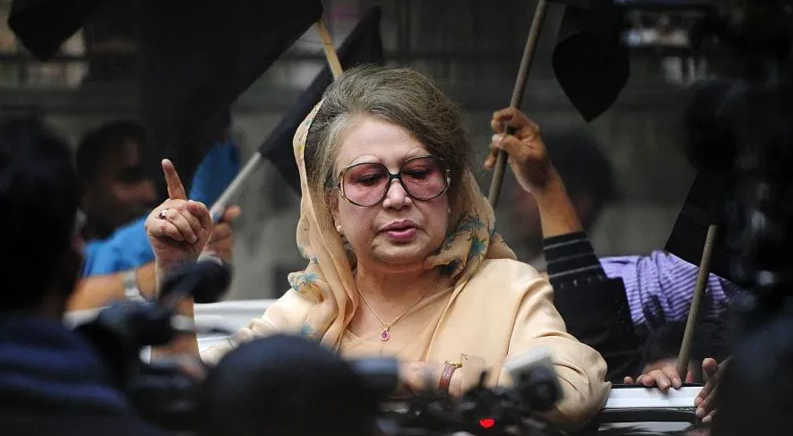
Khaleda Zia, the first woman to serve as prime minister of Bangladesh, died at 80. She played a major role in the country’s politics for many years.
Zia led the Bangladesh Nationalist Party (BNP) and served as prime minister twice—in the 1990s and early 2000s. She was known for her strong leadership and efforts to bring democracy to Bangladesh.
From Housewife to Political Leader
Khaleda Zia was born in West Bengal in 1945. Her family moved to what is now Bangladesh after India split in 1947. At 15, she married Ziaur Rahman, a young army officer who later became president.
Ziaur Rahman helped lead Bangladesh after independence. He became president in 1977 but was killed in a military coup in 1981.
Before his death, Khaleda Zia stayed out of politics. After he died, she joined politics and rose to lead the BNP.
Fighting Military Rule
Between 1982 and 1991, the military ruled Bangladesh. Khaleda Zia led protests and rallies to bring back democracy. She refused to accept the military’s hold on power.
In 1991, after the military stepped down, her party won the general election. She became Bangladesh’s first female prime minister and the second woman to lead a Muslim-majority country.
Reforms and Rivalries
During her first term, Zia made primary school free and compulsory for all children. This helped improve education across Bangladesh.
In 1996, she lost the election to her rival Sheikh Hasina and the Awami League.
Zia returned to power in 2001 with a strong parliamentary majority. During her second term, she reserved 45 seats in parliament for women and worked hard to educate young girls.
Legal Troubles and Imprisonment
After stepping down in 2006, Zia faced corruption charges. Authorities arrested her in 2007.
In 2018, the court found her guilty of embezzling money meant for an orphanage. Many people saw these charges as politically motivated. She spent years in jail but later released for health reasons.
Return to Politics and Final Years
Mass protests in 2024 forced Sheikh Hasina’s government to resign. Khaleda Zia regained her freedom and political rights.
She traveled abroad for medical care in early 2025. Even though she was sick, she remained an important figure for her party.
Khaleda Zia is survived by her elder son, Tarique Rahman, who recently returned from exile and might lead the BNP in the future. Her younger son, Arafat “Koko” Rahman, died in 2015.