
World Report 2026 cites sweeping erosion of rights, mass immigration raids, and mounting economic fallout as United States reaches a critical crossroads
The United States stands at a critical juncture in early 2026, according to Human Rights Watch’s World Report 2026 on US democracy, which declares the global human rights system “in peril.” A significant share of responsibility, the organization says, lies with policies enacted during President Donald Trump’s second administration, describing them as a “broad assault” on democratic pillars and a dangerous shift toward authoritarian governance.
Released in February 2026, the report documents rapid erosion across core democratic protections, including judicial independence, voting rights, women’s and LGBTQ+ rights, disability safeguards, free expression, and racial justice. Human Rights Watch accuses the administration of dismantling civil rights enforcement mechanisms, terminating federal diversity, equity, and inclusion programs on inauguration day, and wielding executive power to intimidate political opponents, journalists, and civil society groups.
“This is not simply a rollback of protections,” said HRW’s U.S. program director. “It is a dismantling of democracy’s foundations.”
Immigration Enforcement at the Center of the Crisis
Immigration policy emerges as one of the most alarming areas of concern.
Human Rights Watch reports inhumane detention conditions, degrading treatment, and excessive use of force. At least 32 people died in Immigration and Customs Enforcement custody during 2025, with four additional deaths recorded by mid-January 2026, bringing the total to at least 36 since early 2025.
The administration has carried out mass raids, deployed federal agents across wide swaths of the country, and transferred migrants, including Venezuelans, to third countries such as El Salvador, where detainees have reportedly been placed in notorious prisons linked to allegations of torture.
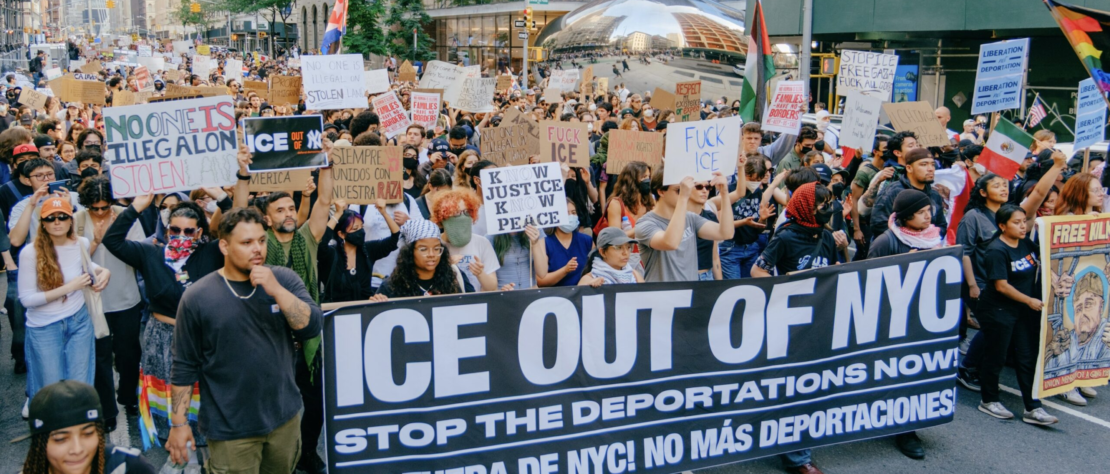
These actions have terrorized immigrant communities and triggered nationwide protests.
Federal enforcement has been concentrated in border states including Texas, California, Arizona, and Florida, but operations have expanded dramatically into interior cities. Minneapolis became a flashpoint in late 2025 and early 2026, when large-scale federal deployments led to several high-profile incidents.
Two U.S. citizens, Renée Nicole Good on January 7, 2026, and Alex Pretti on January 24, 2026, were fatally shot during enforcement actions. Their deaths sparked protests across cities from Portland to Los Angeles, with demonstrators chanting slogans such as “ICE Is Not Welcome.”
Border zones extending 100 miles inland, covering much of the U.S. population, have seen increased racial profiling and aggressive tactics, while Midwestern and Northeastern cities report raids that have driven fear through immigrant neighborhoods.
Voting Rights Under Threat
Human Rights Watch also highlights the reintroduction and promotion of the SAVE Act (Safeguard American Voter Eligibility) during 2025 and 2026 as emblematic of broader threats to democratic participation.
The legislation would require documentary proof of citizenship, such as passports or birth certificates, for voter registration. Critics warn this could disenfranchise millions, particularly people of color, married women who have changed their names, young voters, and elderly Americans who may lack ready access to such documents.
Despite overwhelming evidence that noncitizen voting is exceedingly rare, opponents argue the measure injects confusion and instability into elections.
A Long-Building Democratic Recession
The report emphasizes that this moment did not arise overnight.
Globally, democracy has retreated to levels last seen in 1985, with approximately 72 percent of the world’s population now living under autocratic rule. While U.S. inconsistencies in promoting human rights abroad have existed for decades, Human Rights Watch identifies 2025 as a tipping point.
Trump’s return to office accelerated patterns of scapegoating, defiance of court orders, and executive overreach, developments the organization says align with pressure from authoritarian leaders in Russia and China seeking to weaken the international rules-based order.
Economic Consequences Mount
Beyond civil liberties, the administration’s policies are producing tangible economic fallout.
Reduced net migration, potentially turning negative in 2025 for the first time in decades, has slowed labor force growth, dampened consumer spending, and lowered GDP estimates by tens of billions of dollars annually.
Immigrant-dependent industries including construction, agriculture, hospitality, and food processing report acute labor shortages. California has experienced workforce declines of up to 7 percent among noncitizens in some periods.
Economic analyses project trillions of dollars in lost output over the next decade if current trends persist, alongside growing pressure on Social Security due to reduced payroll contributions. Local economies in immigrant-heavy communities have already seen business closures and declining activity as fear keeps residents indoors.
Protests Grow as Tensions Rise
Resistance to ICE operations continues to expand nationwide. While scholars point to institutional safeguards such as state-level pushback and court challenges, they also warn of rising risks for political violence amid escalating tensions.
Human Rights Watch cautions that impunity is accelerating democratic decline.
With protests spreading, economic pressures mounting, and civil liberties under strain, the organization argues that the coming months will determine whether institutional checks, civil society, and public mobilization can reverse course, or whether the United States is entering a deeper and more enduring era of rights erosion.
“The question now,” the report concludes, “is whether America’s democratic guardrails will hold, or whether this chapter marks a lasting retreat from the values it once championed.”