
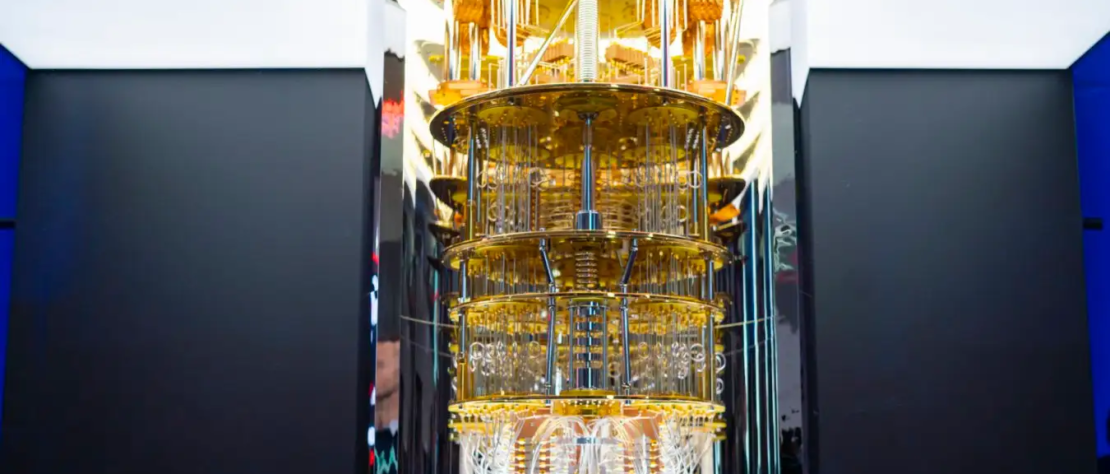
From decades of theory to real-world engineering, the race toward fault-tolerant machines accelerates
Quantum computing stands at a pivotal moment in early 2026. It is moving from decades of theoretical promise and periodic hype to a phase of rigorous engineering, practical prototyping, and targeted commercial deployment.
Moreover, recent developments highlight this maturation. Government-backed funding for small innovators, bold claims from industry leaders about energy efficiency, and accelerating progress in error correction all point to a near-future utility for quantum technology by the late 2020s.
“Quantum systems will prove far more energy efficient than classical AI,” IonQ CEO Niccolo De Masi said in a February 9, 2026, CNBC interview.
Federal Funding Signals Commercial Momentum
On February 10, 2026, the U.S. National Institute of Standards and Technology (NIST) announced $3.19 million in Phase II Small Business Innovation Research (SBIR) awards. These grants went to eight small businesses across seven states.
The awards, selected competitively in September 2025, support R&D in AI, biotechnology, semiconductors, quantum technologies, and related fields. For example, Icarus Quantum Inc. in Boulder, Colorado, received $400,000 to work on noise-free excitation of semiconductor quantum dots. This project aims to develop turnkey photon sources, which are essential for scalable quantum networks and computing.
These initiatives highlight NIST’s role in bridging foundational research with commercial applications. They also strengthen U.S. leadership in quantum hardware amid global competition.
Industry Leaders Bet on Energy Efficiency and Speed
Meanwhile, industry voices are amplifying the narrative of imminent practicality.
In a February 9, 2026, CNBC interview, IonQ CEO Niccolo De Masi said quantum systems will be “far more energy efficient than classical AI.” He argued that IonQ is at the forefront, comparing the company to the “Nvidia of quantum.” Near-term applications include AI optimization, biotechnology simulations, and national security.
This energy efficiency comes from quantum mechanics’ ability to explore vast solution spaces exponentially faster for certain problems. As a result, it could greatly reduce the enormous power demands of training large AI models on classical supercomputers.
“We’re moving beyond experiments and toward systems that solve real problems,” De Masi added.
From Hype to Hard Engineering
The broader field has shifted decisively from hype to engineering discipline. Experts note 2025 as the year quantum error correction (QEC) became the universal priority. Breakthroughs like Google’s Willow chip showed scalable error suppression below the threshold needed for reliable operation.
Industry roadmaps from IBM, Riverlane, and QuEra predict early fault-tolerant quantum computers (FTQCs) in 2026–2027. These machines will feature logical qubits capable of dependable operations. In addition, publications surged on QEC codes in 2025, and AI-assisted decoding is gaining traction to reduce computational overhead.
Through 2027, analysts expect incremental wins in hybrid quantum-classical systems. These include logistics optimization, financial modeling, drug discovery via molecular simulations, and materials science. Even noisy intermediate-scale quantum (NISQ) devices deliver value today in these areas.
The Historical Journey: From Quantum Weirdness to Engineered Reality
Quantum computing’s story began over a century ago with the foundations of quantum mechanics.
Max Planck’s 1900 quanta resolved blackbody radiation paradoxes. Einstein’s 1905 photoelectric effect confirmed wave-particle duality. Niels Bohr’s 1913 atomic model added structure. The 1920s and 1930s solidified the theory through the work of Heisenberg, Schrödinger, and Dirac.
The computing leap arrived in the 1980s. Paul Benioff described a quantum Turing machine in 1980. Richard Feynman’s 1981 keynote explained that simulating quantum physics requires quantum hardware. David Deutsch formalized the universal quantum computer in 1985.
Peter Shor’s 1994 algorithm, which factors large numbers exponentially faster, ignited excitement and raised cryptography concerns. Lov Grover’s search algorithm added practical appeal.
Early 2000s experiments showed proof of principle using NMR systems, trapped ions, and superconducting qubits. The 2010s brought NISQ devices, including Google’s 2019 “quantum supremacy” claim, IBM’s cloud-accessible systems, and IonQ’s trapped-ion progress.
Investments surged after 2020. By 2025, private funding topped billions annually. Importantly, falling error rates, developing hybrid architectures, and rising geopolitical stakes make this a strategic technology race.
Geographical and Economic Impacts: A Concentrated Yet Globalizing Landscape
Quantum technology promises transformative gains, potentially worth trillions across pharmaceuticals, finance, energy, and AI.
Market forecasts project hardware sales and services to grow rapidly from 2026 onward. Revenues could surpass billions as utility-scale systems emerge. Private investments hit record highs in 2025, with public funding exceeding $10 billion, including Japan’s $7.4 billion commitment.
Geographically, the ecosystem remains concentrated.
North America leads in private innovation and investment. U.S. firms include IBM, Google, IonQ, and Rigetti. Government support comes from NIST, DOE, and NSF. Europe follows, with PASQAL in France and IQM in Finland. Asia-Pacific is growing through China’s state-backed efforts, Japan’s funding push, Singapore’s talent development, and Australia’s PsiQuantum initiative.
Emerging hubs are forming in the Middle East, such as Saudi Arabia. Analysts warn of a “quantum divide” if access remains limited.
At the same time, concentration fosters both competition and collaboration. U.S. export controls reflect national security priorities, while international partnerships aim to share benefits. Financial centers like New York and London, along with pharmaceutical hubs such as Boston and Basel, stand to gain first. Broader spillovers, including jobs in engineering, standards, and software, could expand prosperity if talent pipelines grow worldwide.
A Defining Moment for a Transformative Technology
As 2026 unfolds, quantum computing is no longer a question of “if.” The question now is “how soon” and “for whom.”
With steady engineering progress, supportive policies such as NIST’s SBIR investments, and leadership from companies like IonQ, the field edges closer to reshaping industries and economies. Notably, the next few years will determine whether this quantum leap delivers equitable, world-changing advantages or remains a tool of the few.