
Dramatic Strike in the Indian Ocean
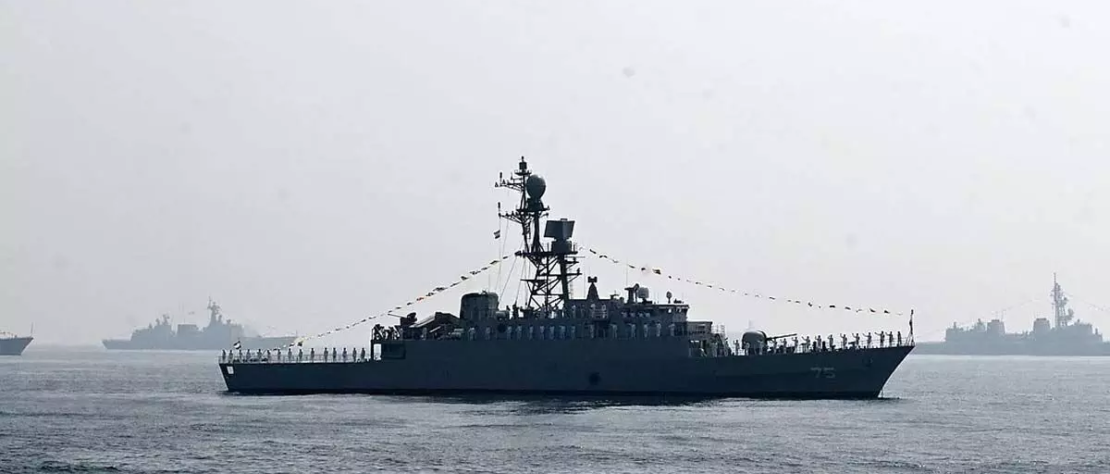
In a dramatic escalation of the ongoing conflict with Iran, a U.S. Navy nuclear powered attack submarine torpedoed and sank the Iranian frigate IRIS Dena in international waters of the Indian Ocean on March 4, 2026.
The strike, confirmed by U.S. Defense Secretary Pete Hegseth, marks the first time since World War II that an American submarine has sunk an enemy surface combatant with a torpedo.
As a result, the incident has drawn immediate global attention and raised concerns about a wider naval confrontation.
Ship Returning From Indian Naval Exercises
The IRIS Dena, a Moudge-class frigate referred to by Iran as a destroyer, was returning to home waters after taking part in MILAN 2026 multinational naval exercises and the International Fleet Review in Visakhapatnam.
Earlier, the ship had docked in Visakhapatnam as a guest of the Indian Navy.
However, while sailing south of Sri Lanka, about 40 nautical miles off Galle, the vessel was struck by a torpedo.
Pentagon Describes a “Quiet Death”
During a Pentagon briefing, Hegseth described the attack as a “quiet death.”
“A single Mark 48 ADCAP torpedo was used to target Iran’s malign naval capabilities.”
Meanwhile, footage released by the United States Department of Defense showed the torpedo striking beneath the ship’s stern. The impact caused a massive explosion that lifted the vessel before it sank rapidly.
Casualties and Rescue Efforts
The frigate carried roughly 180 crew members.
Shortly after the strike, a distress call was issued at about 5:08 a.m. local time.
In response, the Sri Lanka Navy deployed ships and aircraft for search and rescue operations.
So far, authorities have reported:
- 87 bodies recovered
- 32 survivors rescued, many with injuries
- Several crew members still missing
Rescue teams also reported oil slicks and floating debris across the search area.
Officials said the attack occurred within Sri Lanka’s Exclusive Economic Zone, although it was outside territorial waters.
A Symbol of Iran’s Naval Ambitions
The IRIS Dena, commissioned in 2021, was named after Mount Dena in Iran’s Zagros Mountains.
For Iran, the ship represented an important symbol of naval self reliance.
The vessel was equipped with anti ship cruise missiles, torpedoes, naval guns, and a helicopter deck. In addition, it drew global attention in 2023 after completing a global circumnavigation.
Because of this voyage, analysts said the ship demonstrated Iran’s ability to project naval power far beyond the Persian Gulf.
Iran Condemns “State Terrorism”
Soon after the sinking, Iran strongly condemned the attack.
Officials in Tehran called the strike “cowardly state terrorism” and warned that retaliation would follow.
Furthermore, Iranian leaders said U.S. assets in the Middle East and global shipping lanes could now face risks.
Tehran also emphasized that the vessel had taken part in peaceful multinational naval exercises hosted by India only days earlier.
Washington Defends Operation
Meanwhile, U.S. officials defended the strike as a necessary military action within the broader 2026 Iran conflict.
According to Hegseth, the operation was designed to reduce threats posed by Iranian naval activities.
“This action targeted provocative behavior threatening regional interests.”
Therefore, Washington framed the strike as part of a larger effort to counter Iranian military pressure in key maritime regions.
India in a Delicate Position
The incident places India in a sensitive diplomatic situation.
New Delhi hosted the MILAN exercises and fleet review where the IRIS Dena had been welcomed alongside ships from many countries, including the United States and Russia.
At the same time, the sinking occurred in the Indian Ocean, a region often seen as India’s strategic backyard.
Because of this, analysts say the event may challenge India’s image as a net security provider in the region. However, Indian officials have so far responded cautiously in order to avoid straining relations with Washington.
Sri Lanka Focuses on Humanitarian Response
Authorities in Sri Lanka have focused mainly on rescue and humanitarian work.
Government officials stressed that the attack happened in international waters. Nevertheless, Sri Lanka quickly deployed naval resources to help search for survivors and recover victims.
Expanding Conflict in the Indian Ocean
The incident shifts the shadow conflict between the United States and Iran beyond the Persian Gulf and Red Sea into the wider Indian Ocean.
This region is one of the world’s most important maritime trade routes.
As a result, security analysts warn that the escalation could increase risks for global shipping.
Possible consequences include:
- Higher insurance costs for cargo vessels
- Disruptions to energy transport routes
- Rising global fuel and goods prices
Fears of Retaliation
Experts believe Iran could respond through asymmetric tactics.
For example, analysts warn of potential drone attacks on tankers or naval mines placed in busy sea lanes.
Particular concern surrounds major maritime chokepoints such as the Strait of Hormuz and Bab el-Mandeb.
In addition, some analysts say an increased naval presence from China, possibly presented as trade protection, could complicate the security situation further.
Diplomatic fallout may also include Iran withdrawing from remaining nuclear or maritime agreements.
A Wreck That Could Reshape the Region
The wreck of the IRIS Dena now lies on the floor of the Indian Ocean.
However, analysts warn that the consequences of the strike may extend far beyond the immediate battle.
In the long term, the event could reshape maritime security and geopolitical tensions across one of the world’s most vital trade corridors.