
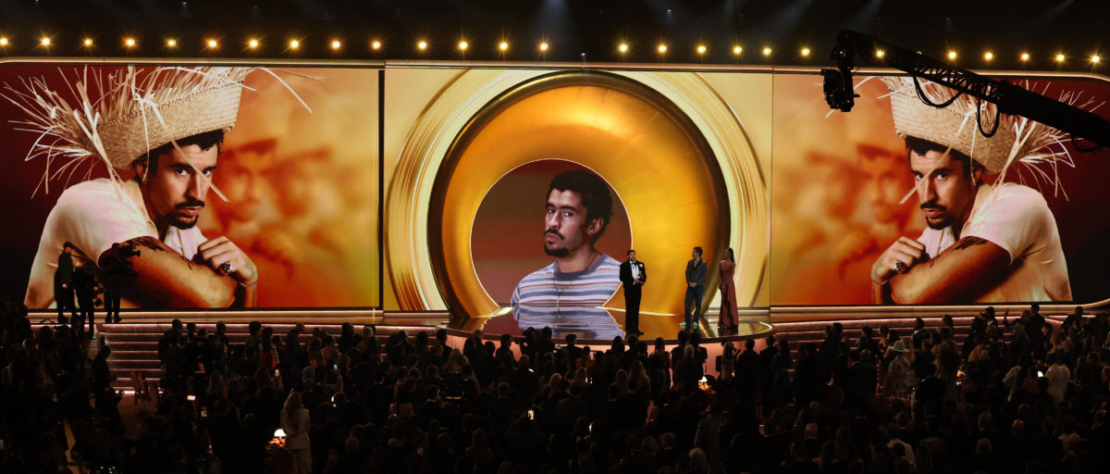
Puerto Rican superstar becomes first artist to win Album of the Year with a fully Spanish-language record, reshaping the cultural map of global pop
LOS ANGELES – In the glittering expanse of Crypto.com Arena, the 68th Annual Grammy Awards on February 1, 2026, etched a new chapter in music history.
Puerto Rican superstar Bad Bunny, born Benito Antonio Martínez Ocasio, claimed the coveted Album of the Year for his sixth studio album, Debí Tirar Más Fotos. The project is a bold, introspective opus entirely in Spanish.
It marked the first time a non-English-language album captured the Grammys’ top honor. The moment shattered linguistic and cultural barriers that have long defined the awards’ English-dominated history.
As confetti rained down and the crowd erupted, Bad Bunny delivered a tearful acceptance speech in Spanish.
“Puerto Rico, believe me when I tell you that we are much bigger than 100 by 35.”
The phrase, a Puerto Rican idiom referencing the island’s modest size but immense spirit, resonated far beyond the arena.
This was not merely a personal victory. It was a turning point for Latin music, highlighting its rise from the margins to the mainstream.
As someone who has spent decades covering the intersection of culture and commerce in entertainment, I have watched Latin artists slowly push against the Grammys’ glass ceiling. Bad Bunny’s triumph feels like the result of years of resilience, innovation, and the steady pulse of reggaetón.
From Puerto Rican Roots to Global Domination
Bad Bunny’s journey to Grammy glory is one of defiance and authenticity.
Emerging from Vega Baja, Puerto Rico, in the mid-2010s, he developed his sound within the island’s vibrant reggaetón scene. The genre began in the 1990s, drawing from Jamaican dancehall, Panamanian plena, and Puerto Rican underground beats.
Often dismissed as “urban” or “street” music, reggaetón carried social stigma. It was linked to poverty, crime, and colonial oppression in Puerto Rico, a U.S. territory facing economic crises, the aftermath of Hurricane Maria in 2017, and ongoing political unrest.
Released in late 2025, Debí Tirar Más Fotos (translated as I Should Have Taken More Photos) is Bad Bunny’s most personal work to date. The album blends nostalgia for Puerto Rican life with sharp critiques of colonialism, gentrification, and cultural erasure.
Tracks like the title song reflect on lost moments during Puerto Rico’s migration exodus. Since 2010, economic hardship has pushed more than half a million residents to leave the island.
Bad Bunny has long used his platform to address social issues. His 2022 track El Apagón protested corruption and power outages. On this album, he weaves in Puerto Rican pride, samples traditional bomba rhythms, and works with local artists.
Critics praised the project’s musical experimentation, which mixes trap, reggaetón, and electronic elements. It debuted at No. 1 on the Billboard 200, becoming his fourth consecutive album to do so.
At the Grammys, Bad Bunny defeated major contenders including Lady Gaga’s MAYHEM, Kendrick Lamar’s GNX, and Tyler, the Creator’s CHROMAKOPIA.
The win followed a near-miss in 2023, when Un Verano Sin Ti became the first Spanish-language album nominated for Album of the Year but lost to Harry Styles.
This time, amid Recording Academy diversity reforms, voters recognized both the album’s cultural depth and its massive commercial success. The project surpassed 4 billion global streams in its first year.
Why This Win Matters
Latin music’s Grammy history has been shaped by slow progress and long-standing exclusion.
The first Latin-specific category appeared in 1975, when Eddie Palmieri won Best Latin Recording for The Sun of Latin Music. The late 1990s Latin pop boom, led by Ricky Martin and Shakira, prompted the creation of the Latin Grammys in 2000.
True integration, however, remained limited.
Santana’s Supernatural in 1999 and João Gilberto’s bossa nova collaborations in 1965 were among the few Latino Album of the Year wins. Neither represented a fully Spanish-language project.
Bad Bunny’s victory changes that reality.
It honors an album entirely in Spanish. It also challenges the dominance of English in global pop recognition. The win reflects how música urbana has grown from Puerto Rican neighborhoods to world stages, influencing K-pop, Afrobeats, and modern pop.
The album speaks directly to Latin America’s colonial past. It builds cross-cultural impact while inviting non-Latin audiences into Puerto Rican stories.
In his speech, Bad Bunny said the moment amplified voices from the Global South. His win proves that cultural identity can carry worldwide appeal.
From San Juan to the World
Bad Bunny’s success has reshaped global listening habits.
Latin music now represents about 15 percent of worldwide streams, with reggaetón leading the growth.
In 2025, Bad Bunny topped Spotify charts in 16 countries, including Mexico, Colombia, and Spain. His songs generate billions of plays each year.
In Puerto Rico, he serves as a cultural ambassador. His 2024 residency at El Coliseo attracted international fans. The event brought millions into the local economy while spotlighting the island’s beaches, cuisine, and heritage.
Latin Music’s Expanding Global Footprint
In the United States, home to 62 million Latinos, his streaming numbers exceed many English-language artists. This has accelerated cross-cultural exchange.
Across Europe and Asia, collaborations with BTS and Blackpink introduced reggaetón to new audiences. These partnerships have helped remove language barriers and inspired young musicians in Brazil and the Dominican Republic to blend local sounds with global styles.
A Billion-Dollar Boost
A Grammy win brings financial momentum.
Research shows winners often see streams rise by 35 percent and ticket sales increase by 55 percent. Income can grow by more than $7 million over two years.
For Bad Bunny, already a streaming billionaire, the Album of the Year win could expand his empire even further. His 2025 world tour earned $500 million. Post-Grammy gains are expected in merchandise, endorsements such as his Adidas partnership, and licensing deals.
The broader industry also benefits.
Latin music generates $1.4 billion each year in the United States alone, driven largely by urbano genres. Bad Bunny’s victory supports major-label investment in Spanish-language artists and encourages talent scouting across Latin America.
For Puerto Rico, still facing a debt crisis, tourism tied to his performances rivals the impact of major festivals.
Emerging artists could follow a similar path. Best New Artist winner Olivia Dean, a British soul singer with Grenadian roots, may now see growth in streams and global touring.
Beyond Music: Fashion and Cultural Conversations
The Grammys also sparked fashion discussions worldwide.
Chappell Roan stunned in a gravity-defying Mugler gown. Sabrina Carpenter embraced Old Hollywood glamour. Bad Bunny wore a tailored Schiaparelli suit that blended tradition with avant-garde design.
Artists like Tyla and Billie Eilish continued pushing boundaries around gender expression, reinforcing the night’s wider message of inclusion.
A Catalyst for What Comes Next
Bad Bunny’s Grammy victory is not an endpoint. It is a catalyst.
It honors Latin music’s long struggle for recognition while accelerating its future. The moment proves authenticity can succeed in a borderless world.
As the industry evolves, more milestones like this are likely to follow. They serve as reminders that music’s true power lies in its ability to unite people, uplift communities, and redefine what is possible.