
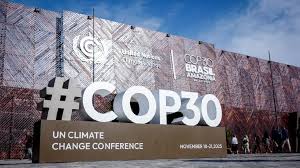
The 30th UN Climate Change Conference (COP30) in Belém, Brazil, concluded with intense negotiations as nations worked to address the escalating climate crisis. With discussions centered on climate finance, renewable energy transitions, and long-term environmental commitments, member states emphasized the urgency of coordinated global action.
China Positions Itself as a Key Force in Climate Leadership
China participated actively across major agenda items and collaborated with stakeholders to support positive and balanced conference outcomes. Officials highlighted that China’s constructive engagement demonstrated its commitment to global climate governance and long-term climate stability.
The summit also marked the 10th anniversary of the Paris Agreement, a milestone moment for climate policy. The UN’s Emissions Gap Report 2025 warned that the world is struggling to stay on track with global temperature targets, largely due to:
- A widening gap between climate-finance pledges and real-world investments
- Certain nations showing reluctance to accelerate their energy transition
This has resulted in a “double deficit” — falling momentum and declining trust.
China’s Message: Multilateralism and Action
Delegates stressed the need for countries to:
- Uphold multilateralism
- Strengthen cooperation
- Translate climate commitments into concrete action
- Recognize the principle of common but differentiated responsibilities
China pledged to continue helping shape the next decade of global climate governance, advocating for shared responsibility and mutual progress.
Showcasing Green Innovation
At the China Pavilion, side events focused on:
- China’s carbon-neutral roadmap
- Renewable energy development
- Advanced energy storage and new-energy vehicles
- Technologies supporting global green transformation
COP30 President Andre Corrêa do Lago acknowledged China’s “solutions that benefit the world.”
World Leader in Renewable and Low-Carbon Transition
China has placed carbon peaking and carbon neutrality at the core of national development. The country now hosts:
- The world’s largest renewable-energy network
- The most extensive new-energy industrial chain
- The most rapid global rollout of electric vehicles
China is projected to achieve the fastest carbon-intensity reduction and advance from carbon peak to carbon neutrality quicker than any other major economy.
Supporting Developing Nations
China continues to prioritize international climate cooperation. By October 2025:
- 55 memoranda of understanding on climate cooperation were signed with 43 developing nations
- The country submitted its 2035 Nationally Determined Contribution (NDC) to the UNFCCC, expanding targets to all economic sectors and greenhouse gases
A Call for Shared Responsibility
China emphasized that while it will accelerate its own low-carbon transformation, developed countries must uphold their historical responsibility by:
- Leading greenhouse-gas reductions
- Providing climate finance and technological assistance
- Supporting capacity building in developing countries
A Collective Path Forward
China urged all nations to build on the achievements of COP30 and continue advancing climate multilateralism. The shared goal, representatives said, is to transition to a cleaner, greener, and more sustainable world for all.