
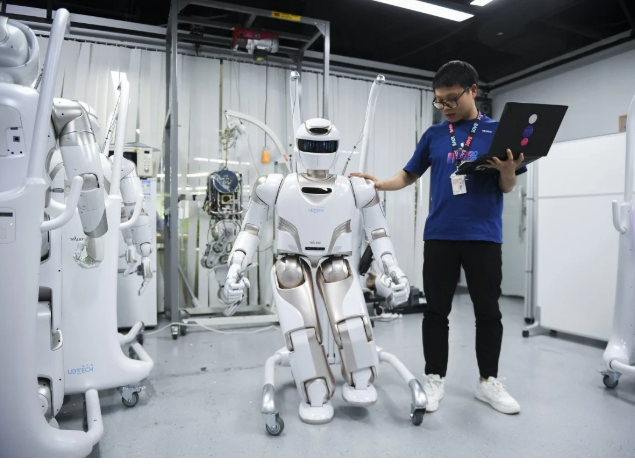
Guangdong is positioning itself to become a global leader in artificial intelligence (AI) and robotics, building on the success of companies like DeepSeek and setting the stage for future growth. The provincial government has unveiled a new initiative to create a “global innovation highland” for AI and robotics, backed by substantial subsidies and incentives for start-ups in these fields.
At a press conference on Tuesday, officials from China’s largest provincial economy detailed a range of policies designed to attract top talent and foster innovation in AI and robotics. The initiative includes grants of up to 50 million yuan (approximately US$6.9 million) for establishing “manufacturing innovation hubs” focused on AI and robotics, as well as grants of up to 3 million yuan for individual companies.
In addition to these incentives, the government plans to support up to five “open-source communities” and 10 use cases of large language models in manufacturing each year, with each receiving funding of up to 8 million yuan.
The provincial government is hoping to turn Guangdong into a global center for AI and robotics, taking inspiration from the success of Zhejiang province, which has seen companies like DeepSeek and Unitree Robotics rise to prominence. DeepSeek’s founder, Liang Wenfeng, hails from Guangdong but made his mark in Zhejiang, where he launched his AI start-up and hedge fund, sparking the rise of Hangzhou as a technology hub.
Guangdong’s Deputy Governor, Wang Sheng, emphasized that the province aims to attract more innovative resources, leveraging the region’s strong supply chain, ecosystem, and application scenarios. “We have the conditions to become the next global leader in AI and robotics,” said Wang.
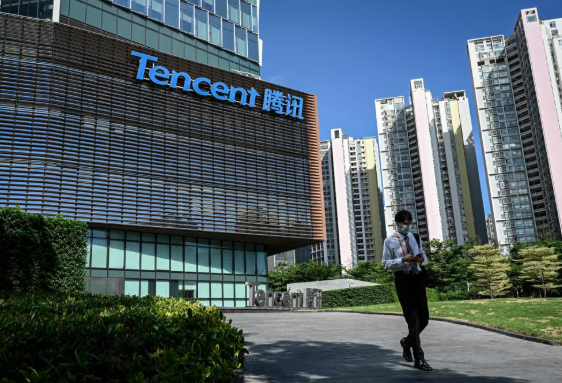
Since 2018, the province has invested over 1.4 billion yuan in AI and robotics projects. Yang Jun, Deputy Head of the Provincial Department of Science and Technology, highlighted key achievements by local tech giants, including Huawei’s Ascend 910B chip and Atlas 900 computing cluster, as well as Tencent’s Hunyuan AI models and PengCheng Mind from Shenzhen’s Peng Cheng Laboratory.
To further bolster its technology ambitions, Guangdong plans to allocate 10 billion yuan annually to promote “independent and controllable core technologies” that reduce the province’s reliance on foreign supplies.
Additionally, Sun Bin, Deputy Head of the Provincial Commerce Department, announced that the upcoming Canton Fair, set to begin in mid-April, will feature a new exhibition dedicated to service robots. The fair, known as the China Import and Export Fair, is the largest of its kind in the country, attracting tens of thousands of international visitors. This new robotics showcase will highlight products from 46 companies, including 16 based in Guangdong.
With these initiatives, Guangdong aims to solidify its position as a global powerhouse in AI and robotics, drawing from its rich technological ecosystem and a commitment to fostering innovation at every level.