
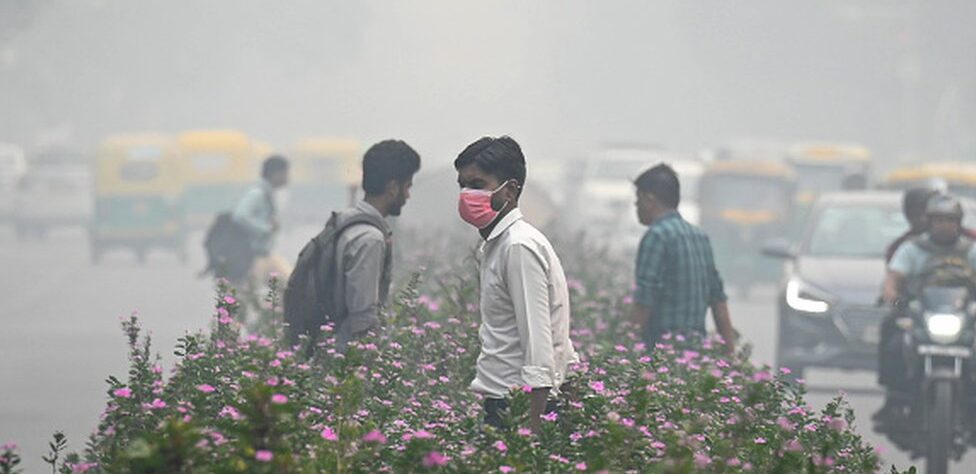
Delhi’s air pollution crisis is taking a severe toll on the city’s youngest residents. As the capital chokes under hazardous smog, children are facing the brunt of its deadly effects, overwhelming hospitals and sparking parental anxiety across the metropolis.
At a paediatric clinic in Noida, near Delhi, waiting halls are packed with children coughing, sneezing, or struggling to breathe. Many parents report that their children began falling ill in October, coinciding with the city’s air quality dropping to hazardous levels.
“This pollution season, 50–70% of my patients come in with respiratory issues,” says Dr Shishir Bhatnagar, a paediatrician at the clinic. “Earlier, the numbers were only 20–30%. Children’s developing immune systems are extremely vulnerable to fine particulate matter (PM2.5), which can cause long-term damage.”
Delhi’s Air Quality Index (AQI) has consistently hovered between 300 and 400 in recent weeks—more than 20 times the World Health Organization’s safe limit. Exposure to such toxic air affects everyone, but children and the elderly are especially at risk.
Parents describe harrowing experiences. Khushboo Bharti recalls rushing her one-year-old daughter Samaira to the emergency room on 13 November. “Her violent cough made her vomit multiple times. On the way to the hospital, she didn’t react to anything. It was terrifying,” she says. Samaira was later diagnosed with pneumonia and required oxygen support for two days. “Even now, if she coughs once, I panic,” Bharti adds.
Gopal, another parent, recently took his two-year-old daughter to a government hospital for severe chest congestion. Doctors warned that she might need inhalers for an extended period.
Studies confirm the dangers. Long-term exposure to polluted air in early childhood can stunt growth, weaken immunity, and even impact cognitive development. Research from the University of Cambridge also links pollution to an increased risk of dementia in later life.
The government has attempted measures like halting construction, banning polluting vehicles, and even cloud seeding, but parents remain fearful. For many families, especially those living in economically disadvantaged areas or congested housing, avoiding outdoor air pollution is nearly impossible.
Dr A Fathahudeen, a pulmonologist, warns: “Children exposed to toxic air consistently have reduced lung defence systems. Untreated childhood infections can cause permanent lung damage and lead to chronic respiratory diseases in adulthood.”
While some schools have postponed outdoor sports and shifted younger classes to hybrid learning, the reality is grim for most children. Parents struggle to balance safety with the need for physical activity. Seema, a mother, says, “They need space to play, but letting them go outside feels like a risk to their lives. It’s heartbreaking.”
As Delhi’s pollution crisis persists, families face a difficult choice: shield their children indoors or risk exposing them to an invisible but severe threat to their health.