
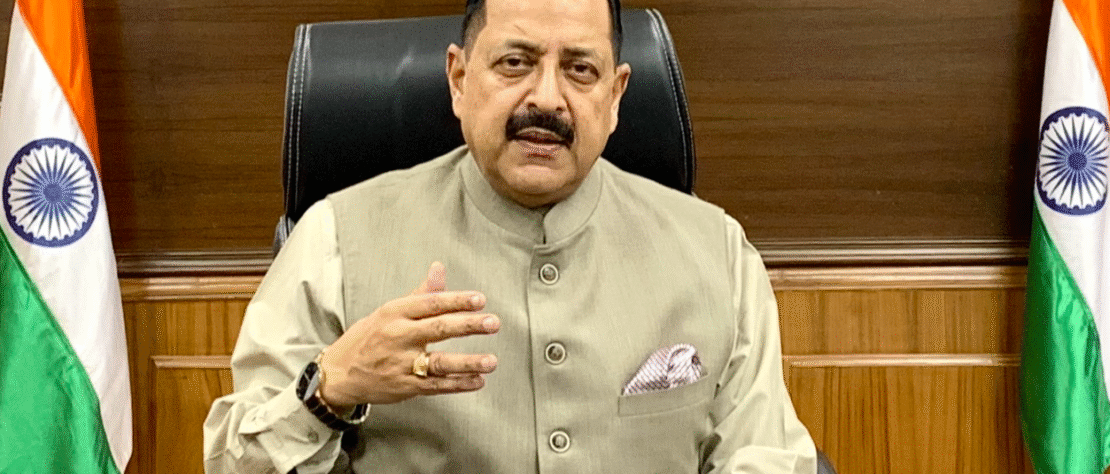
India has entered a defining phase in its transition from a traditional economy to an innovation-driven one and is now shaping global technology trends rather than following them, Union Minister Dr. Jitendra Singh said at the India International Science Festival (IISF) in Panchkula.
During a special Fireside Chat at the four-day festival, Dr. Singh said the last decade has witnessed a profound transformation in India’s scientific outlook, governance strategy and policy reforms. He noted that the country’s economic growth is today powered by research, technology and innovation, and India is increasingly regarded worldwide as a source of new governance models and technology-led development initiatives.
Research, Space and Nuclear Growth
The Minister highlighted the launch of the new National R&D Fund, calling it a major intervention to support high-risk, high-impact research. The fund will back areas previously inaccessible to private players — including space and nuclear energy — by offering long-duration, low-interest support to help emerging enterprises scale and compete globally.
Speaking about space reforms, Dr. Singh said India has moved from a handful of industry players to nearly 400 space start-ups, many of which now receive international recognition. He emphasised that India’s space ecosystem is creating global development models through technology-based applications in healthcare, agriculture, water management and disaster response.
In the nuclear sector, he noted that innovations are improving everyday life through cancer care facilities, public water purification systems and other citizen-centric services.
Changing Global Perception of India
Dr. Singh said young Indians enjoy a dramatically higher degree of respect abroad than earlier generations, crediting India’s rising reputation in science and technology. He said delegations from several countries now visit India to learn from its digital public-service ecosystem — including grievance redressal systems and digital certification for elderly citizens.
He added that India’s internal transformation has strengthened public trust in governance, citing welfare schemes such as Pradhan Mantri Awas Yojana and Ujjwala Yojana, which deliver benefits without discrimination.
Democratisation of Opportunities
The Minister stressed that India’s rise in innovation is linked to equal opportunity reaching smaller towns and rural districts through digital connectivity and affordable access to knowledge. He pointed to the shifting demographic profiles of UPSC toppers — increasingly from remote and non-metropolitan regions — as evidence of expanding aspiration across the country.
He also highlighted the rise of profitable agri-start-ups, including lavender-based ventures founded by former corporate professionals, noting that innovation must translate into sustainable livelihoods, dignity and financial security.
The Decade Ahead
Looking forward, Dr. Singh said India’s greatest resource is its multi-generational talent pool. He predicted that:
- India will play a major role in global space exploration
- An Indian astronaut could set foot on the Moon in 15–20 years
- Artificial intelligence will rapidly transform daily life in India if handled responsibly
He encouraged young innovators to take risks, collaborate with industry and fully utilise the government-supported innovation ecosystem.
As IISF continues, Dr. Singh said such platforms build scientific confidence, curiosity and ambition — reinforcing India’s readiness to contribute leadership to the global scientific community. He said India today stands in its strongest scientific position in recent history and the coming decade will reward innovators who pair scientific imagination with national purpose.