
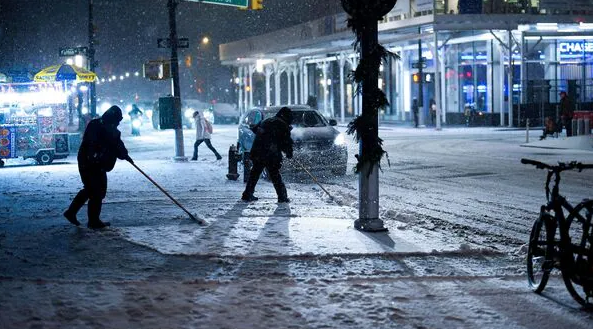
A powerful post-Christmas winter storm swept through the US Northeast starting December 26, 2025, bringing heavy snow, freezing rain, and ice across New York, New Jersey, Connecticut, Pennsylvania, and surrounding areas. The fast-moving system turned holiday travel into a chaotic ordeal, caused widespread power outages, and highlighted the growing intensity of extreme winter weather linked to climate change.
Storm Impacts: Snowfall, Ice, and Disruptions
- Snowfall: Hartwick, NY, recorded up to 11 inches, with parts of Connecticut seeing over 8 inches. New York City experienced 4 to 8 inches, its heaviest snowfall since 2022—while upstate New York and Long Island reported between 6 and 10 inches.
- Ice and Freezing Rain: Significant ice glazing affected Pennsylvania, Michigan, and western New York, leading to downed trees and power lines. Over 35,000 power outages were reported in Michigan alone, with scattered outages across the Northeast.
- Travel Chaos: The storm caused the cancellation of more than 1,500 flights nationwide. Major airports including JFK, LaGuardia, and Newark were among the hardest hit. Roads quickly became treacherous due to icy conditions and reduced visibility.
In Manhattan, despite the blizzard, residents embraced the winter conditions, children sledding in Central Park while commuters navigated slippery streets.
Forecasts and Warnings
The National Weather Service issued winter storm warnings throughout the region, including ice storm alerts in Pennsylvania. While the storm subsided by December 28, lingering bitter cold and the risk of refreezing posed ongoing hazards. Meteorologists also warned of a possible new system arriving early in the new year.
Why This Matters: Climate Change and Extreme Winter Weather
Although overall winter temperatures are rising, the fastest warming season in many parts of the US, climate change is driving greater extremes in winter weather. Warmer air can hold more moisture, which results in heavier snowfall and ice when cold fronts collide. Scientists point to shifting storm tracks and increased weather volatility as signs of a changing climate.
As 2025 draws to a close with record warmth in many areas, this severe storm serves as a stark reminder: extreme weather events are not going away anytime soon. It underscores the urgent need for resilient infrastructure, from power grids to transportation networks, to withstand future storms.