
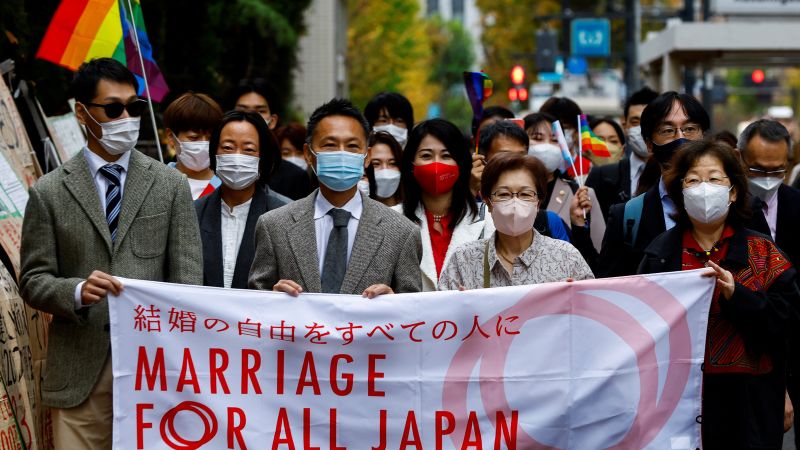
In a major setback to Japan’s LGBTQ+ community, the Tokyo High Court has ruled that the country’s ban on same-sex marriage remains constitutional — breaking from a series of rulings across Japan that had previously offered hope for marriage equality.
The decision disappointed the plaintiffs and supporters who gathered outside the Tokyo courthouse, holding signs calling the verdict “unjust”. Japan continues to be the only G7 nation that neither recognises same-sex marriage nor provides clear legal protections for same-sex couples. Across Asia, only Taiwan, Thailand, and Nepal currently allow same-sex couples to legally marry.
Judge Ayumi Higashi, who delivered the verdict, stated that the legalisation of same-sex marriage is an issue that should be addressed through parliamentary deliberation rather than judicial intervention.
Reaction from Plaintiffs and Rights Groups
The plaintiffs expressed deep frustration and confusion at the ruling. Plaintiff Shino Kawachi questioned whether the court had truly listened to the arguments presented, asking:
“What is justice? Was the court even watching us? Were they considering the next generation?”
Her partner, Hiromi Hatogai, said she felt “extremely outraged” by the ruling but affirmed that the movement will “keep fighting” for equal marriage rights.
Amnesty International condemned the decision, calling it a “damaging step backwards” and urged the Japanese government to take proactive steps toward legalising same-sex marriage so that all couples are granted the same rights as heterosexual citizens.
Part of a Wider Legal Battle
The Tokyo ruling is the last of six high court decisions on marriage-equality lawsuits filed between 2019 and 2021. Five of the previous rulings — from Sapporo to Osaka to Fukuoka — found the ban unconstitutional, although compensation requests were not granted.
Tokyo’s decision now stands out as an exception in what appeared to be steady legal momentum toward marriage equality.
The cases are expected to move to the Supreme Court of Japan, where activists hope for a landmark judgment that could reshape LGBTQ+ rights in the country.