
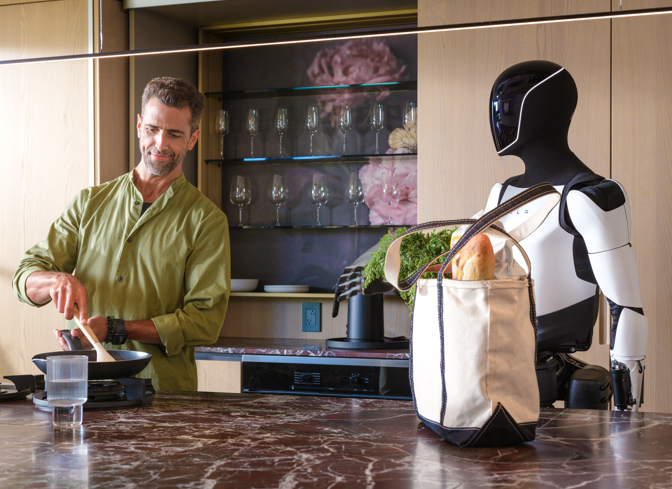
The age of AI-powered robotics has arrived, transforming industries and daily life in ways that were once the stuff of science fiction. From factory floors to living rooms, robots equipped with artificial intelligence (AI) are changing how we live and work, promising a future filled with innovation, efficiency, and collaboration.
The Journey from Prototype to Practicality: In recent years, robotics has evolved from clunky prototypes to sophisticated machines capable of complex tasks. Tesla’s Optimus robot, for example, moved from basic motor functions to folding laundry and performing household chores with increasing finesse. Meanwhile, robots like Agility Robotics’ Digit are making strides in logistics, delivering packages efficiently and autonomously.
Smarter Homes: Home robotics are no longer a luxury. Companies like Xiaomi and Samsung are introducing affordable robots that assist with daily chores such as cleaning, cooking, and even monitoring home security. These robots learn and adapt to user preferences, becoming indispensable companions in the household.
Factories Revolutionized: Industrial robots have progressed beyond repetitive assembly line tasks. Collaborative robots, or “cobots,” work alongside humans, performing dangerous or monotonous jobs while enabling greater productivity. These robots can identify product defects, improve production quality, and even share knowledge with other machines to optimize processes. Such advancements are reshaping the manufacturing sector, enhancing efficiency, and reducing workplace hazards.
Healthcare Gets a Boost: In healthcare, AI-enabled robots are making life-saving impacts. Intuitive Surgical’s da Vinci system has revolutionized surgery, allowing for precision and control that surpass human capabilities. Japan, facing demographic challenges, is leveraging care robots to assist the elderly, offering both physical and emotional support. These robots provide essential services while allowing human caregivers to focus on more nuanced care aspects.
Agriculture Transformed: The farming sector is also reaping the benefits of robotics. Agribots can distinguish between crops and weeds, apply treatments with pinpoint accuracy, and monitor crop health via drones. Companies like Verdant Robotics and Farmwise are pioneering solutions that increase yields while reducing environmental impact, paving the way for sustainable agriculture.
Robots in Education: Educational robots like NAO and Pepper are redefining learning experiences. These robots create interactive lessons tailored to individual students, making subjects like science and technology engaging and accessible. By blending instruction with entertainment, these machines are inspiring the next generation of innovators.
Military and Rescue Applications: On the defense front, robots are taking on dangerous roles, from bomb disposal to reconnaissance. Autonomous submarines and ground robots perform critical tasks that protect human lives. In disaster scenarios, these machines excel in search and rescue operations, delivering aid to inaccessible areas.
Entertainment and Leisure: Beyond work, robots are making waves in entertainment. Disney’s animatronics and robotic musicians showcase the creative potential of robotics, blurring the lines between art and technology. These innovations highlight the versatility of robots in delivering joy and inspiration.
Challenges and Ethical Considerations: While the promise of robotics is immense, challenges persist. Issues such as data privacy, accountability for errors, and equitable access to technology must be addressed. Ensuring that robots serve humanity’s best interests requires careful regulation and ethical oversight.
A Collaborative Future: The integration of AI with robotics represents more than a technological leap; it’s a reimagining of human-machine collaboration. By embracing these advancements, society can unlock new opportunities for progress and innovation.
The robots of today are far from the dystopian visions of science fiction. They are tools for solving real-world problems, improving lives, and fostering creativity. As we continue to explore their potential, the question isn’t whether robots will change the world but how we will shape their impact for the better. The future of robotics is here, and it’s just getting started.